

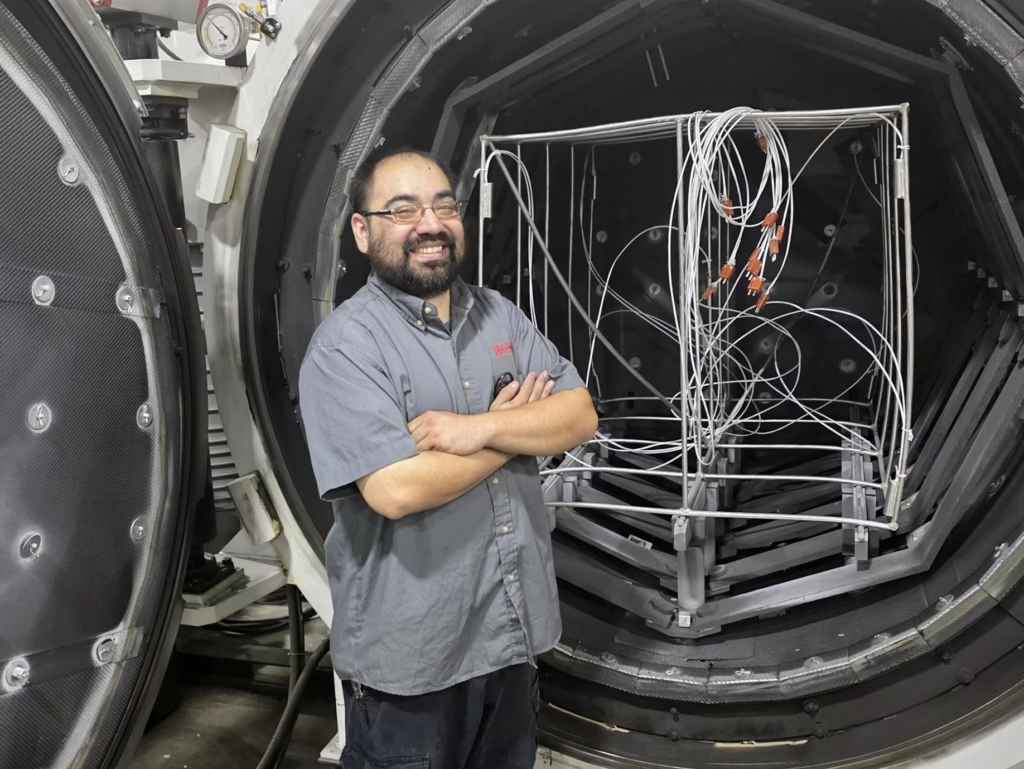
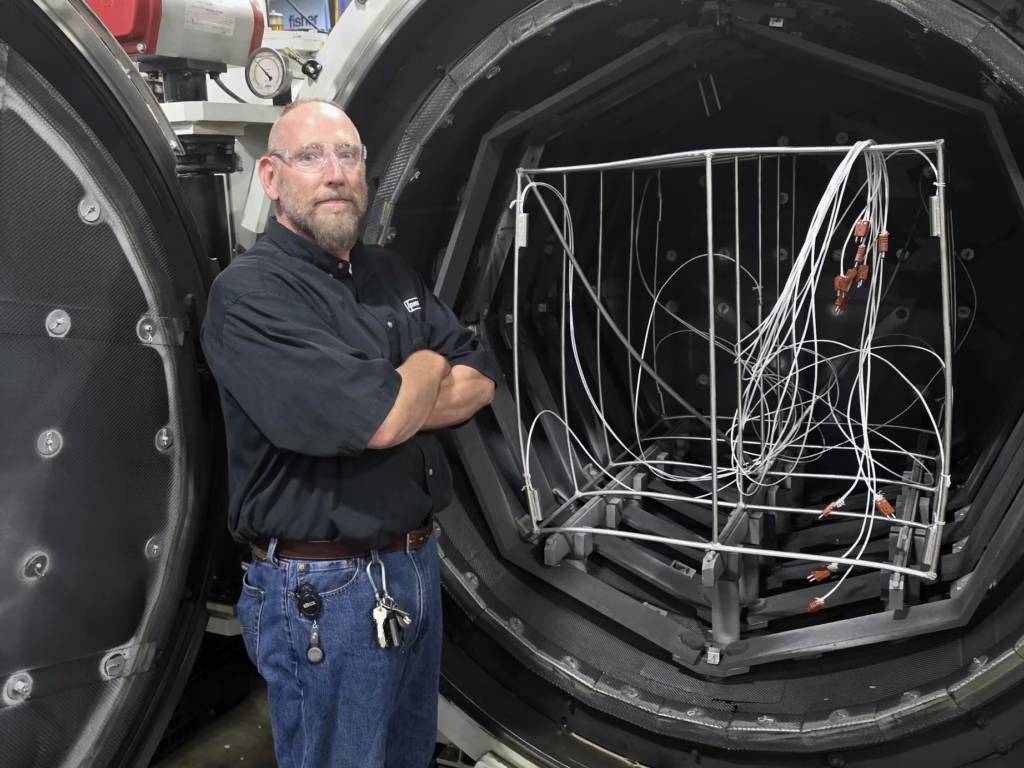
With Ipsen Field Service Engineers Anthony Tapia and Warren Hungness, Jr.
There are a variety of reasons to schedule a service call from an Ipsen Customer Service (ICS) Field Service Engineer, but most of the reasons fall into one of two categories: Preventative Maintenance or Troubleshooting.
Preventative Maintenance can be either scheduled maintenance or predictive maintenance. Typical scheduled maintenance includes pump oil changes, temperature uniformity surveys, or periodic calibrations, while predictive maintenance may occur when your furnace reports the need to replace consumable parts, early signs of suboptimal performance, minor voltage fluctuations, or areas within the hot zone that are outside temperature specifications.
Then you have the troubleshooting call. Equipment may be down, and parts might be backing up. It’s time to bring someone out to do the assessment, diagnose the issue, order the necessary parts, and get the furnace back in business.
In both cases, service efficiency affects your bottom line. The sooner your furnace returns to production, the sooner you’ll catch up with any backlog.
So how can you best prepare for a service call to make sure it’s efficient, thorough, and gets you back in production as quickly as possible? Download the Service Technician Preparation Checklist →
1. What to Know Before You Call
Regardless of the circumstances, before calling to bring in a service technician you’ll want to keep a list of any minor service issues that you’ve been putting off.
“The most common thing we hear from our customers when we are on site is ‘While you are here …’ — four words that can stretch a three-day project into weeks or even months,” said Anthony Tapia, Ipsen field service engineer.
Customers often want to capitalize on having an Ipsen technician on site by having them take a look at any troublesome equipment or unusual performance issues that might be beyond the scope of the original service call.
“It’s one of the reasons that I start my service call by asking the customer’s maintenance contact ‘What do you think that I am here to do?’ That question can ensure we are on the same page or let me know that we may need to start a new ticket,” Tapia explained. “That way, if there’s a more pressing matter than the one I was assigned to do – like a furnace that went down unexpectedly just before I arrived to do a TUS certification – we can start with the most critical issue first.”
‘While You’re Here’ moments can cause your furnace operations to fall off-schedule and add unexpected expense to your service call. Having a list of known issues and irregularities at the time you make the call for an Ipsen service visit can help Ipsen’s dispatcher prepare the field service technician for the visit, order parts if necessary, and assign a specialist when appropriate.
2. How to Prepare Before the Visit
Once you’ve scheduled the date and time your technician is to visit, set aside some time to prepare for the visit in the days leading up to the appointment. These preparation steps can help you avoid the mistakes that lead to extra service call expenses.
“One of the most important things you can do is make sure your furnace isn’t running a process when we arrive,” explained Ipsen Field Service Engineer Warren Hungness, Jr.
“Letting your furnace cool, then – if possible – evacuating the furnace and backfilling to just below atmosphere overnight will help us get started working with a clean and empty furnace right away,” Hungness explained. “Linear leak rates from the previous week and the night before will also help us troubleshoot your furnace’s issues faster. If we have to wait for your process to end, then wait a bit longer until the parts are quenched and cooled, that will delay our ability to draw the furnace down to vacuum to do these tests. That delay alone can add hours and costs to your service call.”
Your service call may require specific tools or resources. A scheduled Temperature Uniformity Survey, for example, will make use of your TUS grid and thermocouples. If you expect to replace pump oil, seals, or other parts, order them ahead of time and keep them on site.
Share any recent process notes that may signal the need for adjustments. Also, prepare the furnace area with a clear workspace, a cart for diagnostic tools, and debris-free access so the technician can get started right away.
3. What to Expect During the Visit
Your Ipsen Field Service Technician will begin their appointment by visiting your reception – please let your receptionist know that our tech is coming, and who their point of contact is. If there is any security certification or paperwork that needs to be done, it should be available for them to complete at reception, if it hasn’t already been submitted to the tech prior to the visit.
At the start of the service call, you’ll want to schedule time with the Ipsen technician and any maintenance or operations team members that interact frequently with the furnace in need of service. Plan to review the scope of the work and prepare to talk about adjusting any timing expectations if that scope has changed from the original work order.
“One thing that you might want to think about at this meeting are troubles or alerts that happen commonly but aren’t normal. They may be minor issues, and you might have a solution that works consistently, but those symptoms might indicate a more significant underlying issue,” Anthony Tapia suggested.
Once the project review is complete, make a point to share essential information about the facility with your Ipsen tech. Identify the locations of the restroom and breakroom, the source of process gas lines, water systems, and power resources, and the place where the Ipsen technician can find the person responsible for decision-making and project review. You’ll also want to point out any places that have restricted access that may be relevant to the service call – particularly if electrical or process gas lines run through that area. Then either step through the process of gaining access to those areas if it becomes necessary or identify a point of contact responsible for responding to calls related to the restricted zones.
Service Technician Preparation Checklist
A few minutes of preparation before your service call can pay off in faster turnaround, fewer delays, and lower costs. So the next time you schedule a service call with Ipsen, keep this Service Tech Prep Checklist handy:
For more helpful tips, visit our Ask the Expert Page.
 English
  German
  Chinese
  Japanese
  Italian
  French
  Spanish