

You’ve flown to Chicago, driven to Cherry Valley, and you’ve had your tour of the Ipsen assembly plant. You saw your vacuum furnace powered up, running a process, and meeting tight tolerances. You reviewed the quality control report with your project manager, signed off on the checklist, and approved the next steps – the delivery of your new Ipsen Vacuum Furnace.
What comes next can feel seamless if done properly: The furnace is delivered, installed, and you’re running your first calibrations process right on schedule.
Easy.
You’re probably not surprised to learn that there’s a team of dedicated, talented, highly skilled workers behind the scenes making sure that your furnace is delivered on time and as expected. What you might not know is that arrangements for skidding, crating, and shipping your furnace have already begun well in advance of your visit. Arrangements are made so that no time is lost between when you sign off on your furnace’s quality check and initial disassembly.
“As soon as the final inspection is done, we receive a report from the project manager that the customer has approved the reports and there will be no further testing needed here in Cherry Valley,” explained Paul Westcott, Production Manager at Ipsen USA. “That’s the sign that we’re good to go ahead with disassembly and shipping preparations.”
The disassembly process begins with photography and documentation of the state of the furnace before one bolt, sensor, or gauge is removed. “We want to make sure whoever is putting it back together, whether it’s our field service installation team or the customer, can see exactly what it looked like at the time of final approval.”
“We make sure to take pictures of our conduit, our wire ways, show how our hoses are run, making sure to highlight any specific, small details that may be included. That way we’ll have a full picture of how that furnace was built,” Westcott continued.
Once the furnace has been photographed and documented, the water system hoses and electrical will be detached, and the furnace progresses to disassembly. “We even pull all of the fuses to ensure that the furnace will be safe to transport and install.”
Conduit pieces are labeled, marked with a letter that indicates which port each end will connect to, and then the mechanical components to be disassembled are documented with manilla wire tags. “The tags are folded over to avoid having their markings covered by paint,” Westcott added.
Paint Shop
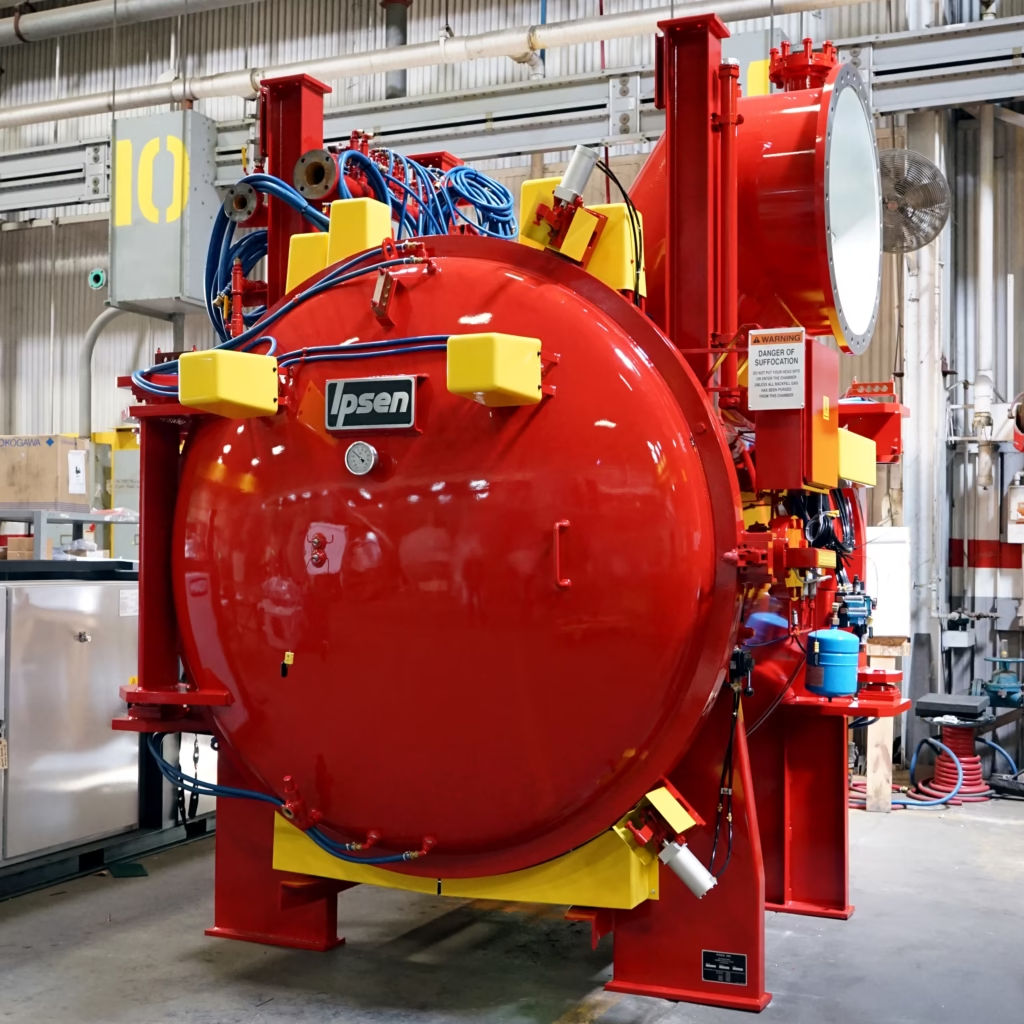
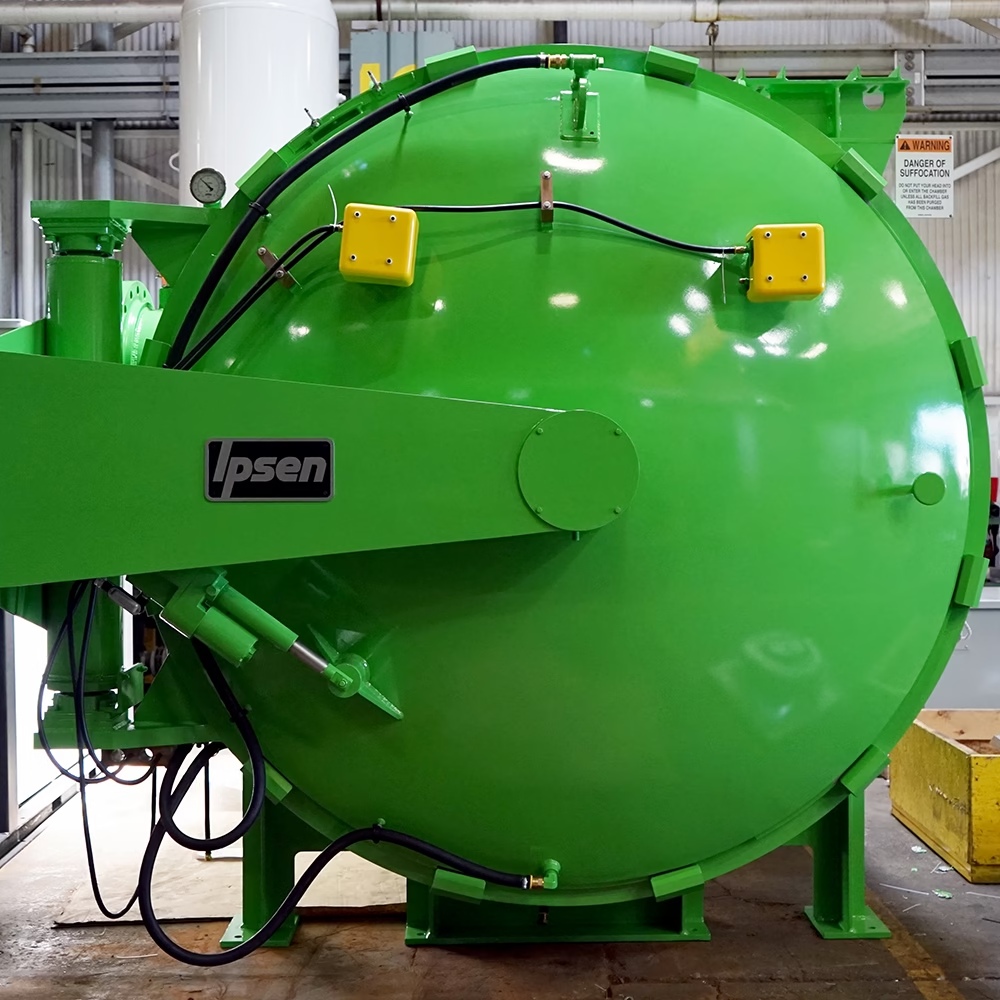
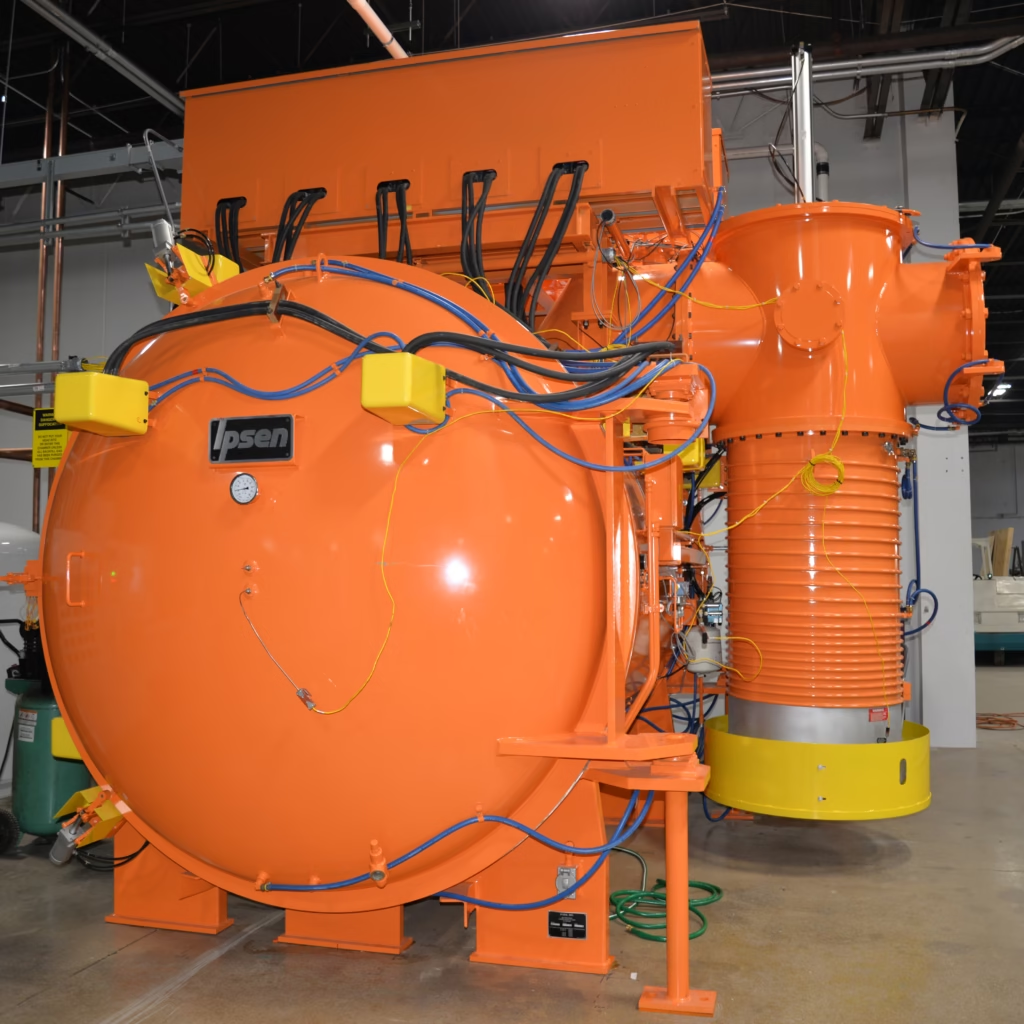
Although standard products come in one color, custom furnaces can be painted any color you choose.
“We have several different colors of off-white—cream, beige, gray, spider web. But more and more, we’re seeing requests for brighter colors,” Paul Westcott acknowledged. “Right now, we’ve got a lime green furnace on the floor that’s slated to go to Singapore.”
As your furnace is going through disassembly, we have another team working directly with the shipper.
“We are going through the size of the vessel, the weights and dimensions of the components, determining whether we’re shipping it to a domestic or foreign customer, and we’ll determine what size skids we’ll need to make,” Westcott said. “We want to get these done before the furnace is torn down so that we can set the components directly onto them.”
This will help protect the parts as they are processed through the paint shop and moved onto the dock. Small but delicate or fragile parts will be fastened to the skid, while larger, more durable assemblies will be shrink wrapped, and a parts crate will be custom built. Some of the hot zone components may be packed up separately, stored within the hot zone, but secured for shipping.
For international shipments, length, width and height are all important because everything will need to be crated, even the vessel itself. Protection from the oceanic elements, the motion of the waves, and the loading and unloading of the containers requires a master class in securing the load. Some of our larger furnaces could easily fill the capacity of two or more containers.
Best If Shipped By…
When it comes to ensuring Ipsen furnaces are being shipped out by the approved shipping date, Paul Westcott isn’t sitting idle, waiting for the go-ahead from quality control. “I work ahead so that we can get our weights and dimensions in order, the shipping information and paperwork collected, and all that even before the furnace comes out of QC,” Westcott explained. “This usually happens while the furnace is still in QC. I will look about 3 to 4 weeks ahead of the contracted ship date to review the cargo with our shipping partner or the freight forwarder.”
For international shipping, the freight forwarder will get information on the contracted ship date and work backwards to account for overland shipping time, when a ship will be leaving port for the closest port to the destination, and the time it will take to transfer the load from truck to container to ship. We’ll work on getting a quote for the overseas portion of the journey with the freight forwarders, and pair that with the shipping overland from our assembly location to the port.
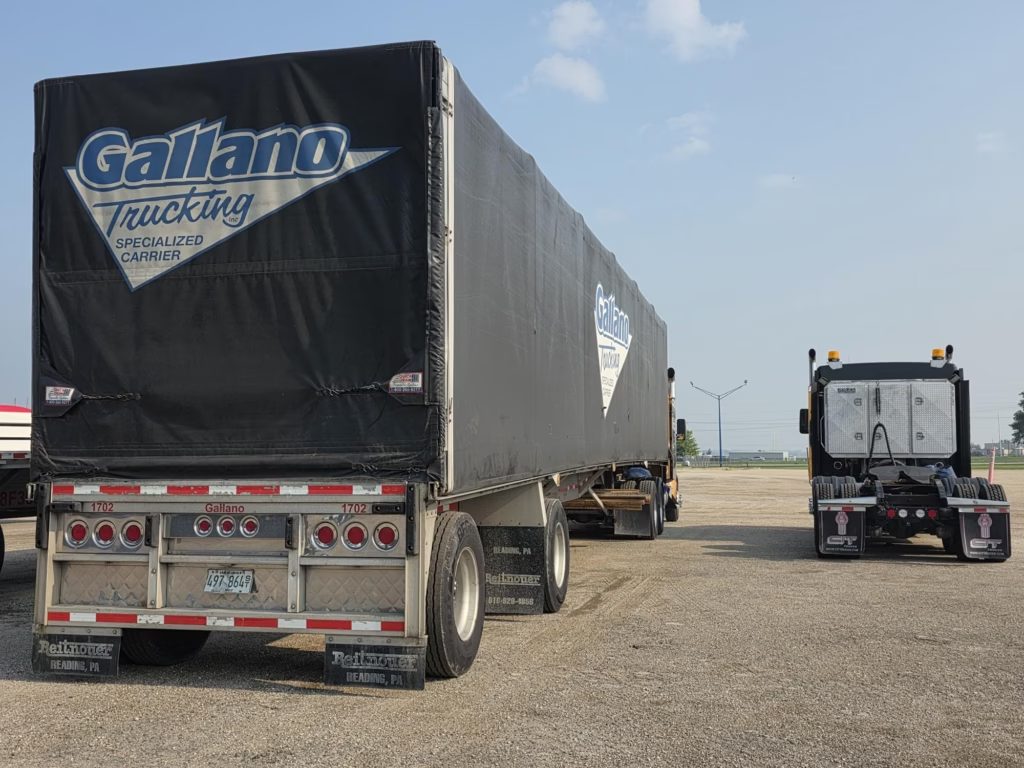
Whether we’re shipping overseas, or simply on the North-American continent, we will need to work with a trucking company capable of handling furnaces of a variety of sizes. While customers are always welcome to choose their own shipping company, Westcott noted “when they look to us to arrange shipping, we tend to go with Gallano Trucking. They’ve moved many of our furnaces over the years, and they know what they’re doing.”

Pick-Up Truck
Visitors to Ipsen will pass Gallano Trucking Inc. as they leave nearby U.S. Highway 20 and turn onto Ipsen Road. A sign in front of their building declares “Thank You Truck Drivers!”
Gallano Trucking is owned and operated by brothers Dave and Brian Gallano, established in 1999 after growing up on the family farm and hauling grain for more than a decade.
At their beginning, they had four trucks operating, specializing in flatbed and oversized loads. “We had our base of customers, our commitment, and our belief in delivering superior customer service,” Dave Gallano explained. Very quickly, Ipsen became one of their most steady customers.
Over the next decade, Gallano Trucking built up a fleet to handle larger and larger pieces of equipment. “In 2008, the Boeing 787 Dreamliner was just starting production. Ipsen was making these huge furnaces, and that was when we bought our first 12-axle heavy haul trailer. We were able to prove that Gallano Trucking could go over and above when it came to commitment to our customers.”
Today, Gallano has a fleet of flatbeds, step decks, low-boys, and Conestoga trailers, delivering around 11,000 truckloads each year anywhere in North America. Their specialty has become handling unique cargo, like the oversized loads needed to haul some of Ipsen’s largest furnaces.
“Some of Ipsen’s largest furnaces may require as many as 12 loads, split across several multi-axle trailers. We can advise small modifications to the cargo that can save significant costs to the customer by knowing cargo limitations and reviewing the status of the skids and crates well ahead of loading the truck,” Dave Gallano explained.
Route Info
One of the reasons customers keep returning to Gallano is their capability of tracking any cargo at any point along the route. “Communication is key to our success. Customers can check the progress of their cargo, get a notice if there’s a delay or a tire blowout, and updated delivery times to make sure the customer is ready to receive the equipment when we arrive.”
Dave Gallano suggests that the optimal time to plan for the shipping of large cargo would be at least two weeks in advance for a short haul, and up to two months for longer distances. “It can take up to a month to do route surveys for longer hauls. Right now, just south of Rockford there’s construction on the Interstate 39 bridge, meaning trucks need to take an alternate route. That can create quite a burden for large shipments, particularly oversize loads.”
That said, there have been times when Gallano Trucking has stepped in to manage time-sensitive delivery requests. “We’ve been called out when another company was booked to pick up a load and discovered that they weren’t able to handle the size or weight. Sometimes we’re able to help right away.”
While domestic customers will be able to inspect their equipment on arrival, deliveries to port for loading into containers require further documentation from the drivers. “We will take pictures at the time of arrival, and upon the unloading of the cargo from the truck from all of the same angles that we took at time of pickup,” Dave said. “In the end, when the customer has enough information to know that the shipment was delivered in the same state that it was picked up, when photos and information are communicated clearly and in a timely manner, the customer will have confidence that they’ll be able to get the same thing that they ordered.”
For more information on preparing for furnace installation once it’s been delivered, check out this story: Preparing for the Installation of Your New Vacuum Furnace.
To learn more about Ipsen’s Installation Services, click here: Installation Services.
 English
  German
  Chinese
  Japanese
  Italian
  French
  Spanish